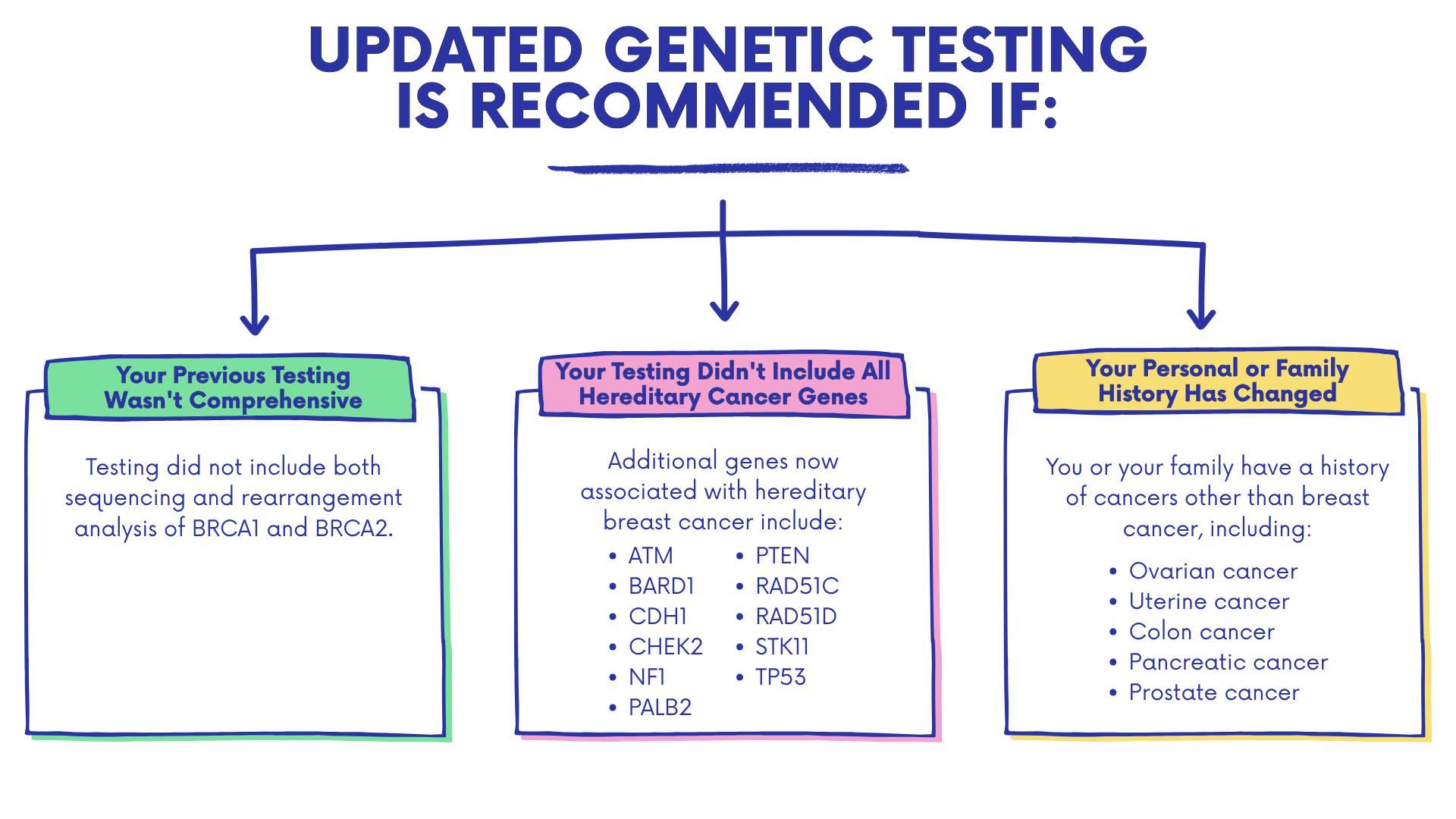
You may have had geneticInherited characteristics. testing done in the past, and while your DNAThe part of every cell that carries out genetic information on cell growth, division, and function. does not change, technology and scientific understanding continue to evolve. For individuals who have previously been tested, it is appropriate to follow up with a genetic counselor every few years to learn about advances or new tests related to hereditary cancer syndromes.
One reason for this is that genetic testing has changed significantly over the past three decades. The BRCA1A gene which, when damaged or mutated, can put a person at a greater risk of developing breast and/or ovarian cancer. and BRCA2A gene which, when damaged or mutated, may put a woman at a greater risk of developing breast and/or ovarian cancer. This gene is also thought to raise the risk for breast cancer in men. genes were identified in the mid 1990’s, and clinical testing became available in 1996. However, this early testing was not “comprehensive”, meaning that it did not completely analyze BRCA1 or BRCA2. Early testing was done with DNA sequencing only, which missed certain types of mutations, or rearrangements, within the genes.
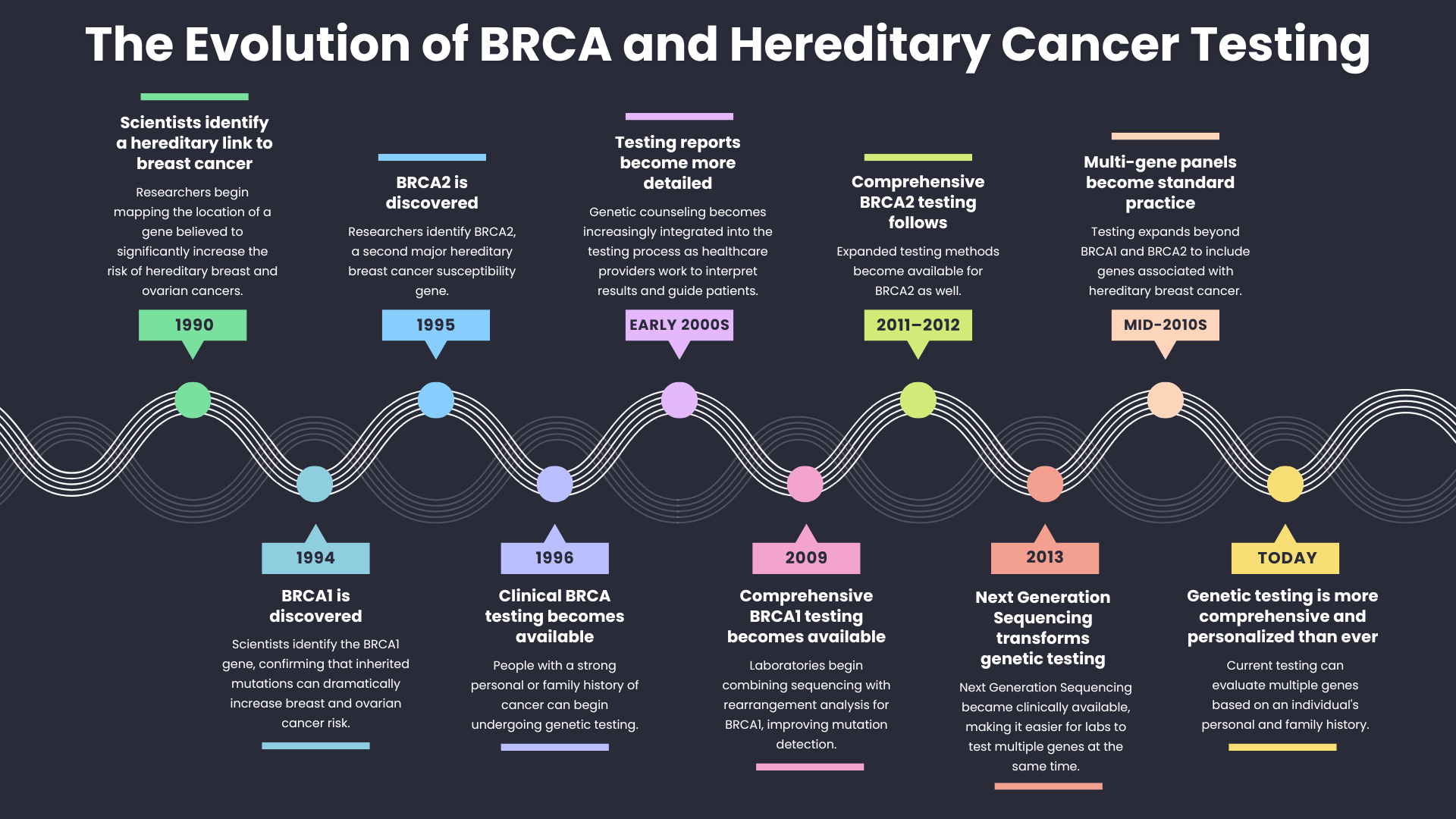
Comprehensive analysis of BRCA1 was being done in 2009, but was not available for BRCA2 until a few years later. A test report will indicate what types of analysis were used. When both types of analysis were done, the report will refer to sequencing and a 5-site rearrangement panel.
Around 2013, Next Generation Sequencing became clinically available, making it easier for labs to test multiple genes at the same time. More labs began offering genetic testing, and they developed panels of multiple genes related to various cancers, including breast, ovarian, uterine, colon, pancreatic and prostate cancer.