
If you’ve ever found yourself Googling something about your breasts at 2 a.m., you are not alone. One minute, you are trying to figure out why your left breast looks slightly different from your right. The next, you are three pages deep into a search for answers and wondering if you should be calling your doctor immediately.
Breast health questions are incredibly common, but they are not always openly discussed. Many people are not sure what is considered “normal,” what is worth keeping an eye on, and when it is time to talk with a healthcare provider.
Here’s the good news: breasts change throughout your lifetime, and many breast changes are completely normal. The even better news? Getting to know what is normal for you can make it easier to notice when something has changed.
So, let’s talk about some of the most common breast health questions that you may be too embarrassed to ask your doctor about.
“Is it normal to have hair on your breasts?”
It might surprise you, but it’s completely normal to have hair around your nipples or on your breasts. Hair follicles are found all over the body, including the skin around the areolaThe pigmented skin surrounding the nipple.. Genetics, hormones, and age can all influence how much hair you have and how noticeable it is. Some people have just a few fine hairs, while others have darker or coarser hair.
If you’ve always had a few hairs, there’s usually no reason for concern. However, if you notice a sudden increase in hair growth along with other symptoms, such as irregular periods or severe acne, it’s worth mentioning to your healthcare provider, as it could be related to an underlying hormonal condition.
And yes, if you’ve ever stood in front of the mirror with a pair of tweezers thinking, “Please tell me I’m not the only one,” we promise you’re not.
"Is it normal for breasts to hurt?"
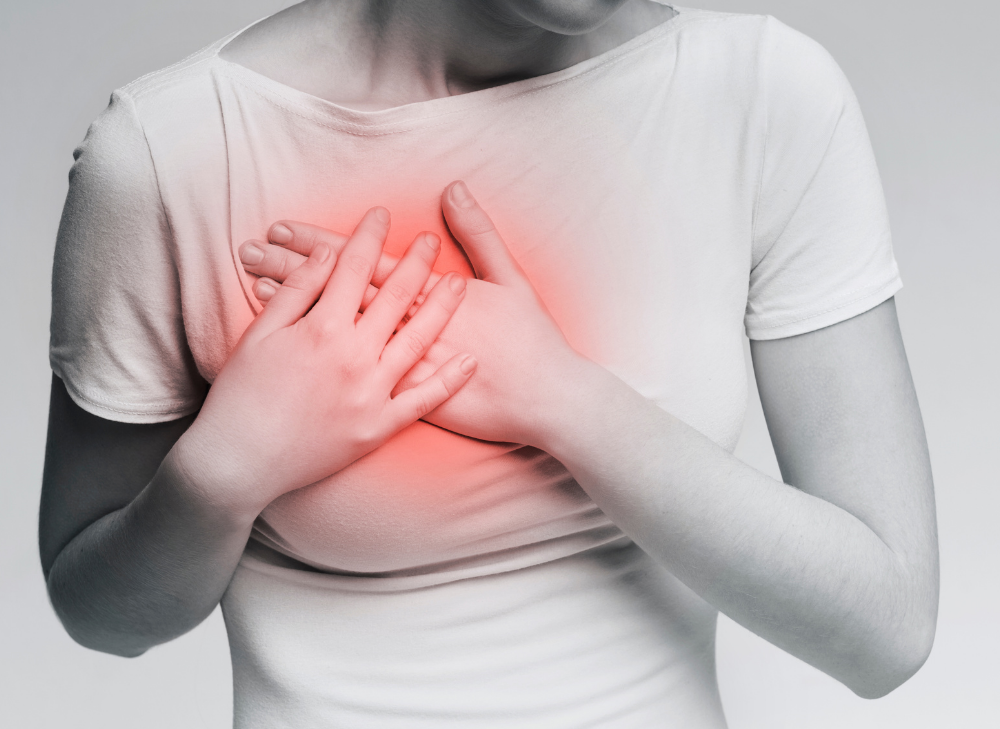
Breast pain, also called mastalgiaBreast pain., is common.
Hormonal changes before or during your period are a frequent cause, but pregnancy, breastfeeding, certain medications, exercise, or even an ill-fitting bra can also be to blame. (So yes, sometimes your bra really is the problem.)
Breast pain by itself is not usually a sign of breast cancer. However, persistent or unexplained pain, especially in one specific area, should be evaluated by your healthcare provider.
“Is it normal for nipples to face inward?”
Pretty sure the Lady Gaga lyrics go, “If you were born with nipples facing in, baby you were born that way.” Okay… maybe not exactly.
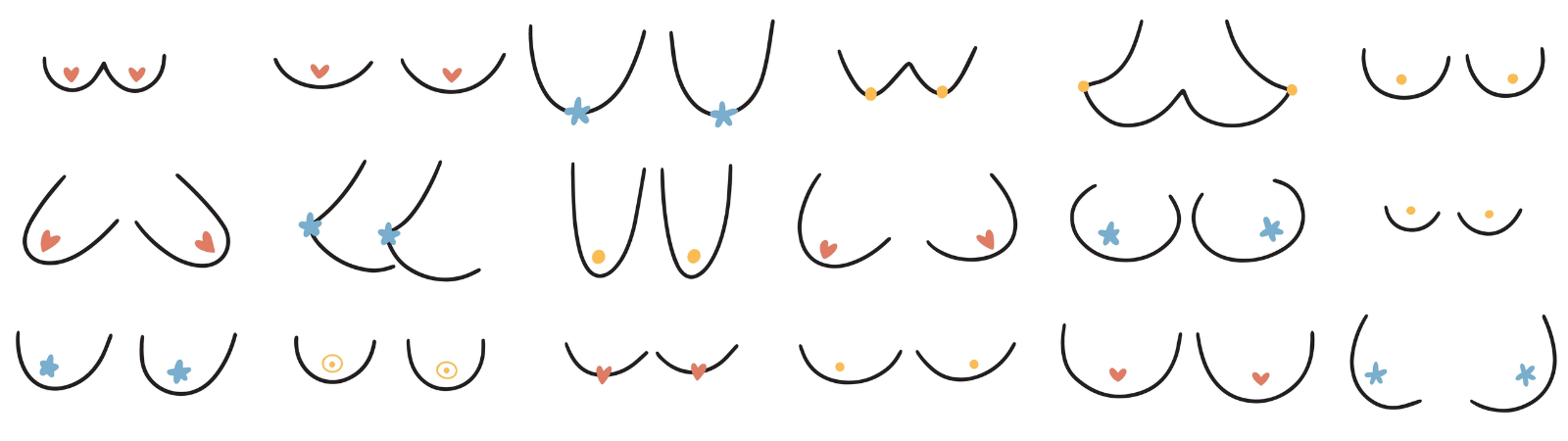
Some people are born with naturally inverted nipples, and if that’s how they’ve always been, it’s usually completely normal. Nipples also vary in size, shape, color, and direction.
What matters most is whether a change is new. If one or both nipples suddenly become inverted, or you notice scaling, crusting, redness, or unusual nipple discharge, schedule an appointment with your healthcare provider.
"Is it normal for breasts to be different sizes?"
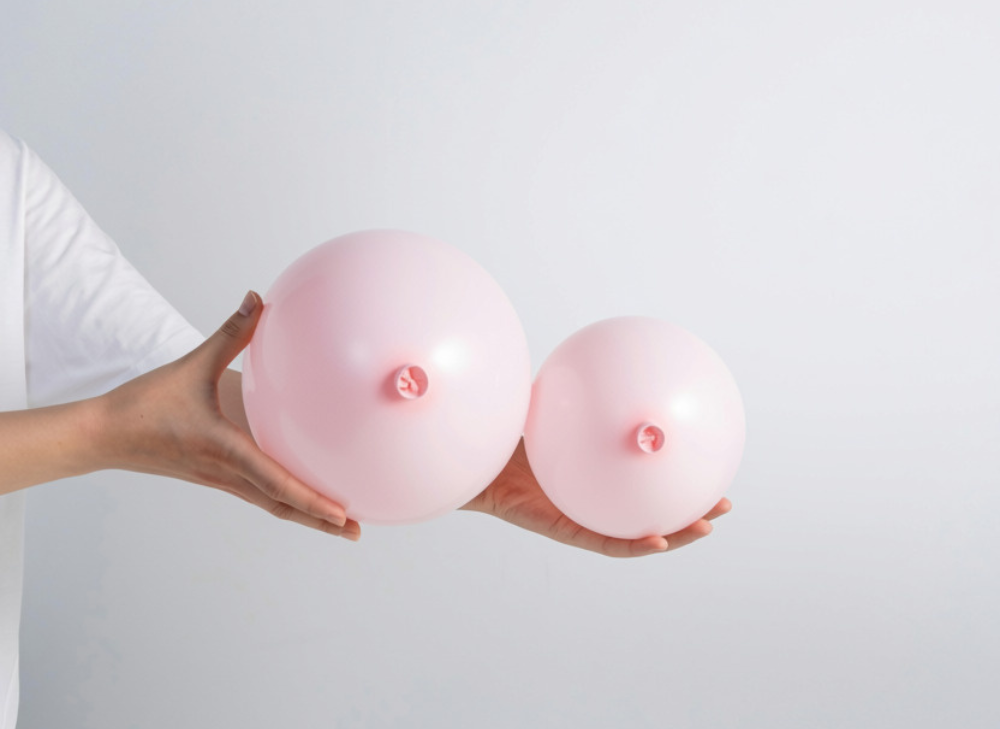
Breast asymmetry is incredibly common. One breast may be slightly larger, shaped differently, or sit a little higher than the other. Bodies aren’t designed with a perfect copy-and-paste function, and breasts are no exception.
Breast size and shape naturally change over time due to hormones, weight changes, pregnancy, breastfeeding, and aging. If you notice a sudden or significant change in one breast, it’s a good idea to talk with your healthcare provider.
“Is it normal to have stretch marks on your breasts?”
Stretch marks can appear during pubertyThe period of becoming first capable of reproducing sexually marked by maturing of the genital organs, development of secondary sex characteristics, and in humans the first occurrence of menstruation in the female., pregnancy, breastfeeding, weight changes, or anytime your body changes quickly. In other words, they’re a normal part of growing and changing.
They may start out pink, purple, or reddish and gradually fade to a lighter shade over time. Most importantly, stretch marks are not a sign of breast cancer and they don’t increase your risk.
Of course, if you notice a new skin change that doesn’t look or feel like a typical stretch mark, or you have concerns about any changes in your breasts, don’t hesitate to reach out to your healthcare provider.